

Commitment overview
Time commitment: High – bringing a case can take years from start to finish, depending on factors such as how complex the case is, how busy the courts are, and whether the other party is willing to settle. There can also be emotional costs for the plaintiff that can take time to navigate.
Cost: It varies – bringing a case can be very expensive, but you can try to keep costs down by getting pro bono legal representation and experts. There may also be opportunities to get funding to bring a case, either from institutional funders or individual donors.
Do I need a lawyer? Yes
Do I need to go to court? Yes (or at least your lawyer does)
What does bringing a case mean?
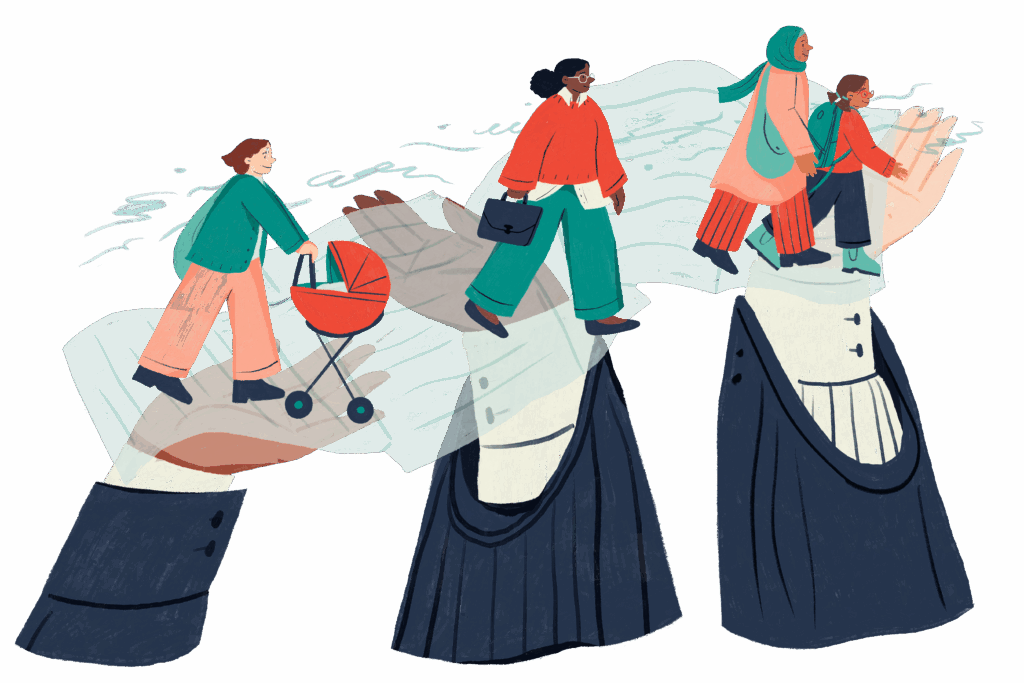
In the context of feminist strategic litigation (FSL), bringing a case means starting a court case that has the potential to result in systemic feminist change. In other words, the court case has the potential to have impacts on others besides just the parties in the court case. This is also called “test case litigation.”
How can gender-based violence advocates bring a case?
In order to bring a case, Canadian law requires a person or organization to have “standing.” Usually, a person or organization that has experienced a legal wrong or disagreement has “private standing” – this means they are personally affected and have a right to bring a case.
Throughout their marriage, Mr. Ahluwalia abused Mrs. Ahluwalia through a pattern of emotional abuse, physical abuse, and financial control. Mrs. Ahluwalia brought a case to start divorce proceedings and asked for child support, spousal support, and property equalization. She also asked specifically for damages for the family violence she suffered during the marriage.
If the rights of a larger group of people are infringed on by a common party or decision (for example, a policy or a law), and especially if people within that group don’t have the resources to bring their own case, another party or organization can apply for “public interest standing” to bring a case on their behalf, even if the party or organization bringing the case isn’t personally affected. This is called “public interest litigation.”
The Canadian Civil Liberties Association (CCLA) challenged New Brunswick’s refusal to fund abortions performed outside of hospitals. The Court allowed the CCLA to have public interest standing, explaining that the organization had a genuine interest in the case based on its dedication to protecting civil rights. It would also not be reasonable or appropriate to require a person seeking an abortion to bring the case.
What kinds of cases are there?
FSL cases are usually brought when an individual or a group of people’s rights are violated or at risk of being violated. Human rights in Canada are protected by the Canadian Charter of Rights and Freedoms as well as federal, provincial, and territorial laws that aim to protect individuals from discrimination. Because many issues impacting survivors involve human rights, bringing a case when there are violations could be one strategy to fight back.
Here are the three most common types of cases that are brought by organizations doing FSL:
Charter Challenges
The Canadian Charter of Rights and Freedoms is the part of the Canadian Constitution (a set of the highest laws in Canada) that protects every Canadian’s right to be treated equally by laws and governments in Canada. It guarantees broad equality rights and other fundamental rights such as freedom of expression, freedom of assembly, and freedom of religion. In practice, it aims to prevent governments from enacting discriminatory laws, policies, or actions.
If a person or group’s Charter rights are violated by a government or one of its agencies (for example, a police agency), they can bring a case known as a Charter challenge.
Issue: After abortion was decriminalized in Canada in 1988, the government of Prince Edward Island (PEI) enacted a policy that no induced abortions would be performed on the Island. As a result, people in PEI were unable to access abortions in the province, and needed to travel to Nova Scotia or New Brunswick for the procedure.
Argument: PEI’s abortion policy violates the right of PEI women to equal access to health care services under s. 15 of the Charter.
Outcome: Less than three months after Abortion Access Now PEI announced its Charter challenge, the PEI government ended its abortion policy. The Premier of PEI announced PEI would open a women’s health clinic in the province, offering a full complement of reproductive health services including medical and procedural abortion.
Check out this factsheet to learn more about the impact of this case.
Human rights cases
Besides the Charter, there are other federal and provincial/territorial human rights laws that aim to uphold human rights and prevent discrimination. The Canadian Human Rights Act protects people from discrimination when they receive services or employment from the federal government. There are also human rights codes in every province and territory that protect people from discrimination in protected social areas such as housing, workplaces, and in institutions and businesses.
If a person or group of people’s protected rights are violated, they can bring a case to a human rights tribunal against the party violating their rights.
Issue: Carceral practices that uniquely and disproportionately impact federally sentenced women, including those who have mental illnesses and/or who are Indigenous. These practices include maintaining structures and barriers which prevent or restrict federally sentenced women from accessing programming, as well as denying or restricting access to Indigenous spirituality.
Arguments: The Correctional Services of Canada (CSC) are engaging in systemic discrimination, contrary to the Canadian Human Rights Act, against federally sentenced women on the basis of sex, race, national or ethnic origin, religion, and disability.
Outcome: The complaints were resolved through mediation facilitated by the Canadian Human Rights Tribunal in Fall 2024, and CAEFS remains committed to seeing the carceral practices above fully ended through advocacy work and other active legal efforts.
Class actions
A class action is when an individual (or individuals) from a larger group that has experienced similar legal wrongs by the same person or organization brings a case on behalf of everyone that has been harmed. This gives everyone who has been similarly harmed by a common party the opportunity to seek damages, even if they aren’t directly involved in bringing the case themselves.
Issue: Discrimination and abuse of Indigenous people, particularly women, by Sûreté du Québec (SQ) officers in northern Quebec
Arguments:
- The Government of Québec is obliged to compensate individuals for the harm caused, as they were committed by SQ officers in the context of their employment
- The government must answer for the fact that the SQ was aware of these practices, but failed to put a stop to them
- These practices constitute violations of the Charter of Rights and Freedoms and the Charter of Human Rights and Freedoms (the “Québec Charter”) for which the government must be held accountable.
Outcome: The case is currently underway.
Reflection question: Are there any GBV issues that you think could be tackled through FSL?
I want to bring a case! Where do I start?
You’re the experts on what types of issues affect the people you work with. A lawyer can help you explore the possible legal avenues available to address those issues and the steps you would need to take to bring a case.

Some lawyers and law firms will take on test case litigation pro bono (for free). Sometimes you may be asked to pay “disbursements,” which are expenses your lawyer incurs as part of their work (for example, photocopying and filing fees).
You may also be able to secure funding for your case from funding sources such as:
Bringing a case around an issue that affects many survivors and their communities has the potential to result in legal decisions that have broad, systemic impacts. It can be a daunting endeavor, however, requiring considerable time and resources from start to finish. In the next few modules, we’ll look at other ways to do FSL that revolve around existing cases, or cases that others have brought.